

Behavior Management in Daycare: Effective Strategies for Challenging Behaviors

Listen to this Article
Are your days in childcare filled with managing tantrums, resolving conflicts, and redirecting disruptive behavior? You're not alone. Creating a positive learning environment where children thrive socially and emotionally is perhaps the most challenging—yet rewarding—aspect of childcare work. Effective behavior management in daycare settings doesn't happen by chance; it requires intentional strategies, consistency, and understanding of child development.
What is Behavior Management in Childcare?
Behavior management in childcare encompasses the approaches, strategies, and techniques providers use to promote positive behavior while effectively addressing challenging ones. It's about creating an environment where children learn appropriate ways to express their needs, manage emotions, and interact with others.Effective behavior management isn't about controlling children or enforcing blind obedience. Rather, it's about helping children develop self-regulation skills through guidance that is developmentally appropriate and respectful.
"Children aren't giving us a hard time; they're having a hard time. Behavior is communication, and our job is to decode the message."
The 5 Principles of Behavior Management
Successful classroom management approaches are built on these core principles:
1. Positive Relationship Building
Strong connections with children form the foundation for all behavior guidance. When children feel secure and valued, they're more motivated to meet expectations.Implementation strategies:
- Greet each child warmly at arrival
- Find time for positive one-on-one interactions daily
- Show interest in children's lives outside of your care
2. Thoughtful Environment Design
Many behavior issues can be prevented through careful arrangement of your physical space and daily schedule.Implementation strategies:
- Design your preschool classroom to minimize congestion
- Provide sufficient duplicates of popular toys
- Schedule transitions thoughtfully to reduce waiting time

3. Establishing Clear Expectations
Children thrive when they understand the classroom rules and behavioral boundaries.Implementation strategies:
- Keep rules simple, positive, and limited in number
- Use visual cues alongside verbal directions
- Consistently reinforce expectations across all activities
4. Teaching Social-Emotional Skills
Many challenging behaviors emerge because children lack the social-emotional tools they need.Implementation strategies:
- Directly teach children vocabulary for emotions
- Model problem-solving language
- Use stories and role-play to practice social scenarios
5. Individualized Response Planning
Each child is unique, with different triggers, motivations, and needs.Implementation strategies:
- Observe patterns in behavior to identify triggers
- Develop specific strategies for each individual child
- Partner with families to ensure consistency

Understanding the Root of Challenging Behavior
Effective behavior management strategies begin with understanding why challenging behaviors occur:
Developmental Factors
- Limited impulse control (normal in young children)
- Still developing language to express needs
- Egocentric perspective (difficulty seeing others' viewpoints)
- Need for autonomy and control
Environmental Factors
- Overstimulation
- Inconsistent expectations
- Challenging transitions
- Limited access to materials

Individual Factors
- Temperament differences
- Sensory processing needs
- Language delays
- Home environment changes
Remember that behavior is often how children communicate needs they cannot express verbally. Your role is to help decode these messages rather than simply controlling the behavior.
How to Manage Challenging Behaviour in Childcare
Addressing Tantrums and Emotional Outbursts
Tantrums are common in early childhood as children learn to manage big emotions with limited coping skills.Effective strategies:
- Remain calm (your regulation helps their regulation)
- Acknowledge feelings: "I see you're feeling frustrated"
- Offer simple choices to restore sense of control
- Create a calming corner with sensory tools
- Teach calming techniques during neutral moments
Managing Physical Aggression
Hitting, biting, and pushing often emerge when children lack words to express strong feelings.Effective strategies:
- Intervene immediately to ensure safety
- Use clear, simple language: "Hands are not for hitting"
- Help children identify appropriate alternatives
- Increase supervision during high-risk periods
- Notice triggers and patterns to prevent future occurrences
Addressing Refusal and Defiance
Power struggles often emerge as children develop independence and autonomy.Effective strategies:
- Offer limited, genuine choices
- Avoid direct commands when possible
- Use "first-then" language
- Give advance notice before transitions
- Create consistent routines children can predict
Supporting Attention-Seeking Behavior
Some children use disruptive behavior to gain attention when their needs for connection aren't met.Effective strategies:
- Provide regular positive attention throughout the day
- "Catch" children being good
- Create special responsibilities that offer positive spotlight
- Teach appropriate ways to request attention
Creating a Behavior Management Plan for Your Child Care Setting
A proactive approach helps child care providers address behaviors consistently:
1. Observation and Assessment
Before implementing strategies, carefully observe:
- When and where does the challenging behavior occur?
- What happens immediately before?
- How do others typically respond?
- Are there patterns in timing or activities?
2. Prevention Strategies
The most effective approach prevents problems before they start:
- Create consistent daily routines
- Design the environment to support positive behavior
- Teach emotional vocabulary and coping skills
- Use visual supports for expectations and transitions
3. Response Protocols
Develop consistent responses all staff can implement:
- Agreed-upon language for addressing common behaviors
- Clear steps for de-escalation
- Documentation procedures for tracking incidents
- Communication protocols with families
4. Using Positive Reinforcement
Positive behavior increases when acknowledged specifically:Instead of generic praise ("Good job!"), try:
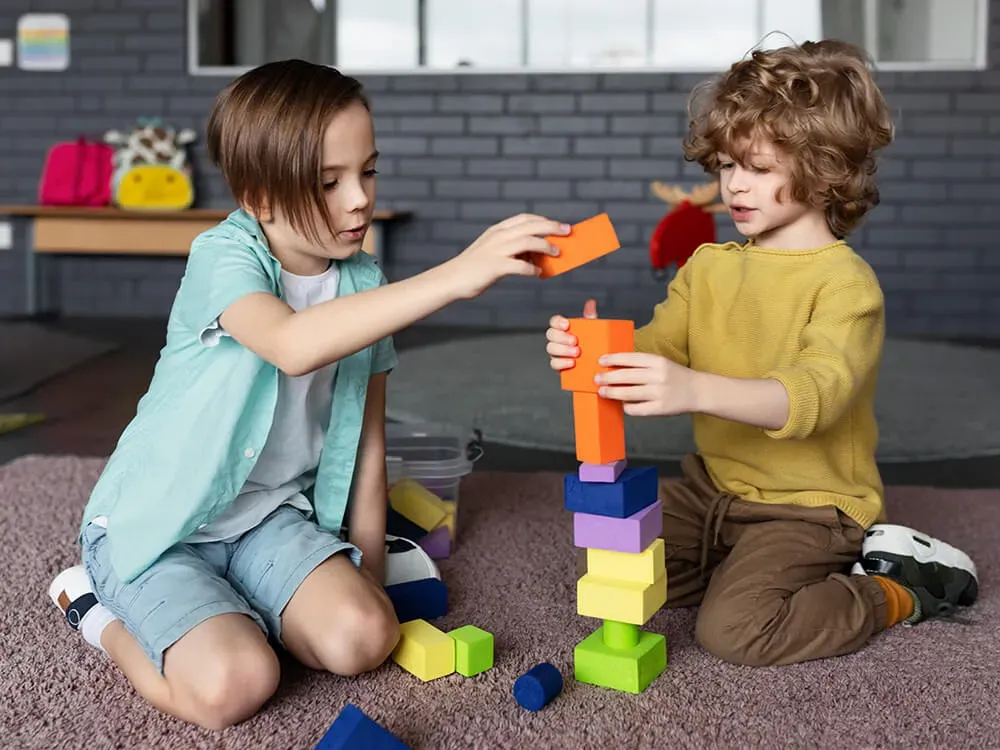
- "I noticed you shared the blocks with Emma. That was kind."
- "You used your words to tell Sam how you felt. That helped solve the problem."
- "You waited patiently for your turn. That shows self-control."
Supporting Children with Persistent Behavioral Challenges
Sometimes standard approaches aren't sufficient for children with persistent behavioral issues:
Developing an Individualized Plan
- Meet with families to gather additional insights
- Set specific, measurable goals
- Create targeted strategies based on observation
- Establish regular review periods
When to Seek Additional Support
Consider consultation if:
- Behaviors endanger the child or others
- Challenges significantly disrupt learning environment
- Strategies aren't showing improvement over time
- Behavior differs significantly from developmental norms
Resources that may help:
- Early childhood mental health consultants
- Early intervention specialists
- Speech-language pathologists (for communication-related behaviors)
- Family counseling references
Building Partnership with Families
Consistent approaches between home and childcare create the most success:
Effective Communication Strategies
- Share positive observations, not just challenges
- Discuss behavior objectively without labeling the child
- Focus on solutions rather than problems
- Ask about strategies that work at home
Supporting Parents Through Behavioral Challenges
- Acknowledge the emotional toll of challenging behaviors
- Provide resources and developmental information
- Celebrate small improvements together
- Create a team approach to address concerns
Measuring Progress in Behavior Management
Successful behavior management in daycare isn't about achieving perfect behavior but rather seeing growth in children's self-regulation skills.

Signs of progress include:
- Increased intervals between challenging incidents
- Fewer interventions required from adults
- Children beginning to use taught strategies independently
- Quicker recovery from emotional moments
- Children using more words and fewer physical actions
Creating a Culture of Positive Guidance
The most effective behavior management in daycare comes from creating an environment where positive behavior is the norm:
- Model the behavior you want to see
- Maintain consistent clear expectations
- View challenging moments as teaching opportunities
- Recognize effort toward behavioral goals
- Reflect on and refine approaches regularly
Moving Forward with Confidence
Addressing challenging behaviors requires patience, consistency, and a toolbox of strategies. Remember that behavior change takes time—often weeks of consistent implementation before seeing significant results.The relationships you build and the skills you teach children through effective behavior management in daycare benefit them far beyond their early years. By helping children identify feelings, solve problems collaboratively, and consider others' perspectives, you're developing skills they'll use throughout life.
Want to showcase your professional approach to behavior management? List your childcare program on KinderPage, Canada's premier childcare directory, where parents seeking quality care can find your service!What challenging behavior do you find most difficult to address in your setting? We'd love to hear your experiences!
About the Author
Mary Abbasi
Contributing writer at KinderPage, sharing insights about childcare and early childhood education in Canada.
Frequently Asked Questions
What is behavior management in childcare?
What are the five core principles of effective behavior management?
Why do challenging behaviors occur in children?
How can common challenging behaviors like tantrums and aggression be managed?
What is involved in creating a comprehensive behavior management plan for a childcare setting?
When should additional support be sought for children with persistent behavioral challenges?
Why is building partnerships with families crucial for behavior management?
How can progress in behavior management be measured, and what signifies a positive culture of guidance?
Related Articles
Continue reading about childcare and early education


