

The Best Books for Your Daycare Library: Building a Love for Reading

Creating a vibrant, accessible library is one of the most powerful ways to nurture curiosity, vocabulary, and social-emotional growth in your daycare classroom. By selecting the best books for daycare and organizing them for easy discovery, you prepare children for academic success and help them explore the world around them. Below, you’ll find age-specific book recommendations, practical tips for organizing your library, and the science-backed benefits of reading in early childhood.
A thoughtfully curated daycare library filled with the best books for daycare—spanning picture books, interactive stories, and multicultural tales—lays the foundation for lifelong learning, language development, and a love of reading in every little one.
Creating a vibrant, accessible library is one of the most powerful ways to nurture curiosity, vocabulary, and social-emotional growth in your daycare classroom. By selecting the best books for daycare and organizing them for easy discovery, you prepare children for academic success and help them explore the world around them. Below, you’ll find age-specific book recommendations, practical tips for organizing your library, and the science-backed benefits of reading in early childhood.
Why the Best Books for Daycare Matter
Reading is more than a classroom activity—it’s a cornerstone of early childhood development. Research shows that 90% of brain development happens before kindergarten, and regular exposure to books to read in a calm, nurturing environment boosts vocabulary, comprehension, and emotional intelligence. Children who develop strong reading habits early are better prepared for school, show greater empathy, and are more likely to become lifelong learners.
Key Finding:
Early reading proficiency is a strong predictor of later academic success, and children who aren’t proficient by grade 3 are four times more likely to drop out of high school.
Essential Book Recommendations by Age Group
Infants (0-12 Months): Gentle Introductions
For infants, choose sturdy board books with repetitive text, vibrant illustrations, and interactive elements. These books introduce rhythm, rhyme, and the joy of reading.
| Title | Author | Why It’s Perfect for Little Ones |
| Goodnight Moon | Margaret Wise Brown | Soothing bedtime routine, gentle repetition, classic illustrations |
| Global Babies | The Global Fund for Children | Real photos of babies worldwide, introduces diversity |
| Ten Little Fingers and Ten Little Toes | Mem Fox | Rhyming, inclusive, celebrates all babies |
| Little You | Richard Van Camp | Indigenous author, gentle rhymes, family love |
| Making Faces | Molly Magnusson | Teaches emotions, includes a mirror for self-discovery |

Toddlers (1-2 Years): Interactive Discovery
Toddlers love books that encourage participation and movement. Look for lift-the-flap, touch-and-feel, and repetitive stories that keep little ones engaged.
| Title | Author | Why It’s Great for Toddlers |
| Brown Bear, Brown Bear, What Do You See? | Bill Martin Jr. & Eric Carle | Repetitive, supports vocabulary and color recognition |
| The Very Hungry Caterpillar | Eric Carle | Interactive die-cuts, counting, healthy eating |
| Dear Zoo | Rod Campbell | Lift-the-flap, animal discovery, fine motor skills |
| Press Here | Hervé Tullet | Interactive, hands-on, encourages participation |
| The Family Book | Todd Parr | Celebrates all families, inclusive and colorful |
Preschoolers (3-5 Years): Stories That Spark Imagination
Preschoolers are ready for more complex stories, rich vocabulary, and multicultural themes. These books for preschoolers help them understand the world and encourage classroom discussion.
| Title | Author | Why Preschoolers Love It |
| The Snowy Day | Ezra Jack Keats | Caldecott winner, diverse protagonist, explores environment |
| Dreamers | Yuyi Morales | Award-winning, immigration, resilience, multicultural |
| Last Stop on Market Street | Matt de la Peña | Community, diversity, kindness, vibrant illustrations |
| We’re Going on a Bear Hunt | Michael Rosen | Chanting, movement, group engagement |
| Hush! A Thai Lullaby | Minfong Ho | Thai culture, rhythmic, bedtime routine |
Best Books for Daycare Preschoolers: Advanced Learning
Tip:
Incorporate books with rhyme, repetition, and interactive elements to build vocabulary and comprehension while keeping little ones engaged.
How to Organize Your Daycare Library for Success
Age-Based and Thematic Organization
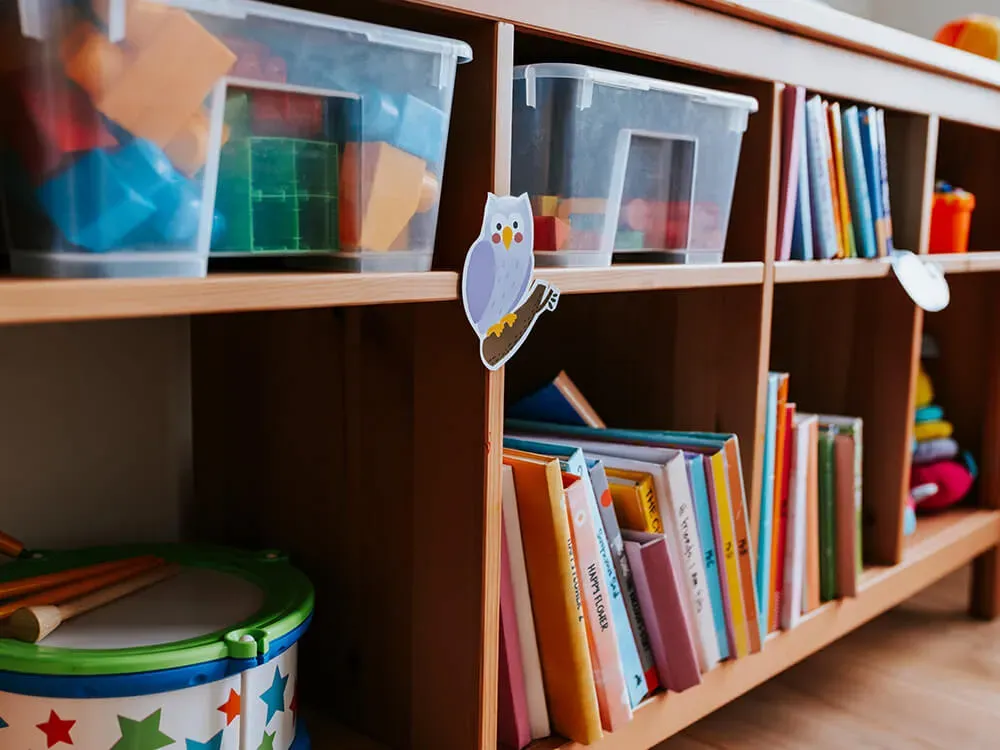
- Low, accessible shelves: Place books for infants and toddlers on the lowest shelves for easy reach.
- Color-coded labels: Use stickers or dots to indicate age group or reading level (e.g., green for beginners, yellow for intermediate).
- Front-facing displays: Show book covers to attract attention and help children choose independently.
- Themed bins: Rotate books by season, holiday, or classroom theme to keep the collection fresh and relevant.
Space-Saving and Flexible Solutions
- Book baskets and bins: Use labeled baskets for easy transport and organization.
- Multi-purpose furniture: Benches with built-in storage maximize space in small classrooms.
- Cozy reading nooks: Add rugs, cushions, and soft seating to create a calm, inviting environment.
Maintenance and Book Rotation
- Regular rotation: Swap out books to align with curriculum topics or children’s interests.
- Teach book care: Show children how to handle books gently and return them to the right place.
- Involve children: Let them help organize and choose new books, fostering ownership and responsibility.
The Benefits of Reading for Early Childhood Development
| Benefit Area | Research Findings |
| Brain Development | Early reading stimulates neural pathways for language and comprehension. |
| Language Acquisition | Shared reading boosts vocabulary and language processing. |
| Cognitive Skills | Builds phonological awareness, print knowledge, and logical thinking. |
| Social-Emotional Growth | Fosters empathy, kindness, and understanding of the world. |
| School Readiness | Prepares children for academic success and lifelong learning. |
Key Finding:
Children exposed to diverse, high-quality books in early childhood show stronger language, cognitive, and social-emotional skills.
Multicultural and Inclusive Book Selection
- Diverse characters and authors: Choose books that reflect a range of cultures, family structures, and abilities.
- Bilingual and dual-language books: Support children’s home languages and introduce new ones.
- Authentic representation: Select stories that naturally incorporate diversity and avoid stereotypes.
Practical Tips for Building and Maintaining Your Library
- Start small: Begin with core titles for each age group and expand as you discover what your learners love.
- Partner with families: Send books home, host family reading events, and share related resources for parenting support.
- Professional development: Train staff in read-aloud techniques, classroom management during reading time, and cultural sensitivity.
- Celebrate reading: Recognize participation and encourage children to share their favorite books with the group.
Are you proud of the reading experience you offer at your center? Help more families discover what makes your program special—claim your center on KinderPage today and showcase your commitment to early literacy!
Nurture a Love for Reading—Prepare Children for Life
A well-organized, inclusive daycare library filled with the best books for daycare is more than a collection—it’s a launchpad for discovery, empathy, and lifelong learning. By thoughtfully selecting books for every age group, creating a welcoming environment, and integrating reading into daily routines, you teach children to love books and prepare them for success in school and beyond.
About the Author
Mary Abbasi
Contributing writer at KinderPage, sharing insights about childcare and early childhood education in Canada.
Related Articles
Continue reading about childcare and early education


